A Plea for Help: Fibroid Surgery Funding
by Adaobi C
Seeking help for fibroid surgery. Prioritized mom's care, now I need support for my own tr...

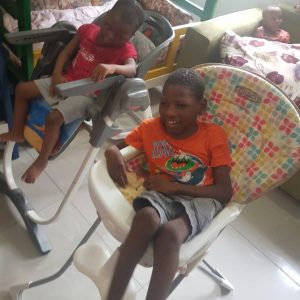
INTRODUCTION
Special education (also known as special needs education, aided education, exceptional
education or Special Ed) is the practice of educating students with special educational
needs in a way that addresses their individual differences and needs. Ideally, this process
involves the individually planned and systematically monitored arrangement of teaching
procedures, adapted equipment and materials, and accessible settings.
The interventions are designed to help individuals with special needs achieve a higher
level of personal self-sufficiency and success in school and in their community that may
not be available if the student were only given access to a typical classroom education.
Common special needs include learning disabilities (such as dyslexia), communication
disorders, emotional and behavioral disorders (such as ADHD and ADD), physical
disabilities (such as Brittle Bone Disease, Cerebral Palsy, Muscular Dystrophy, Spinal
Bifida, and Frederich's Ataxia), and developmental disabilities (such as autism spectrum
disorders and intellectual disability) Birsh et al (2011)
Students with these kinds of special needs are likely to benefit from additional
educational services such as different approaches to teaching, the use of technology, a
specifically adapted teaching area, or a resource room.
Existing structure is a 2-bedroom apartment with a kitchen, 1 office space and 2 toilets.
Plan:
A. Combine the living room with 1 bed room by collapsing the wall partition. This
will serve as the Education/ cognitive learning environment
B. Combine the 2nd bedroom with the office space by collapsing the wall partition.
This will serve as the Physical Therapy / skill acquisition environment
C. Retain the toilet and upgrade with modern fittings. Isolate them for plan A and B
respectively.
D. Retain the kitchen as a kitchen and autoclaving unit.
Materials (Hard component)
1. Tiles can be maintained for room A
2. Wooden floor fit for room B
3. Heat extractor for both toilets and kitchen
4. Flush windows
5. Ramp for wheelchair access
Materials (interior/soft components) A
1. Multi color Floor mats of different shapes and sizes
2. Special chairs with musical fittings and strapable belts
3. Special tables with adjustable fittings
4. Writing board
5. Projector
6. Air conditioners
Materials (Interior/soft components) B
1. Hydraulic Plinth
2. Foam rollers
3. Balance board
4. Gym ball
5. Pediatric walking frame
6. Pediatric parallel bar
7. Pediatric wall bar
8. Gym mat
9. Pediatric rocker board
10. Soft balls/hand exerciser
11. Pediatric table board
12. Finger ladder
13. Pediatric wheel chair
Materials C
1. Grip Mats
2. Toilet Hand rail
3. Transfer belts
Materials D
1. Autoclaving machine
2. Washing Machine
3. Cooking utensils
Materials(Entrance/Exterior)
1. Ramp
2. Flush door
Projection/Care focus
Short term. (First year)
1. Early exposure to basic normal behavioral pattern
2. Neurodevelopmental pattern
3. Prevent post immobilization complications
4. Maintain/preserve existing physiologic state
5. Improve cognition/mental capacity
6. Improve psychosocial behavior
Medium term (First Three years)
1. Improve functional independence
2. Improve mobility
3. Improve social skills
4. Improve balance and coordination
Long term (>3 years)
1. Attain functional independence
2. Attain independent ambulatory viz a viz; wheelchair mobility, walking aid
mobility, independent standing, independent walking.
3. Social adaptation (integrating vocational and sporting activities.)
4. Maintenance therapy.
Resources
Resident (8am to 5pm)
1. Proprietor
2. Caregivers
3. Child development expert
4. Social health workers
5. Auxiliary nurse
Visiting Specialist
1. Physiotherapist (Mondays, Wednesday and Fridays) 5 to 7 hours contact time.
2. Occupational Therapist (Tuesdays and Thursdays) 5 to 7 hours contact time
3. Speech Therapist (Monday’s, Tuesday’s and Thursday’s) 5 to 7 hours contact
time
4. Audiologist. Wednesday’s (5 to 7 hours contact time)
Specialist Cost
Physiotherapist- To be discussed and agreed with Physiomedicare
Occupational Therapist- 70000/Month
Speech Therapist-
Audiologist-
Child/ Adolescent Behavioral expert-250000/Month full time and 180000/Month part
by Adaobi C
Seeking help for fibroid surgery. Prioritized mom's care, now I need support for my own tr...

by Chinonso E
Every now and then, we come across people that need support to offset medical bills or for...
by Akorede A
3 months ago my brother had a stroke. We are raising the funds because we can’t pay my b...







Hub One, 10, Hughes Avenue, Off Herbert Macaulay Way, Yaba 101212, Lagos, Nigeria
Tel: +2349070663915
Email: support@donate-ng.com