



The Unseen Workforce: Who Are Undocumented Workers?
In cities and towns across the globe, undocumented workers form the invisible backbone of many industries. From agriculture and construction to domestic work and hospitality, their labour sustains economies, yet their names and needs often remain overlooked. These individuals, many of whom have fled violence, poverty, or political instability, live in constant uncertainty, navigating barriers that most people never encounter.
Language limitations, lack of access to healthcare, legal vulnerability, and minimal workplace protections all contribute to their marginalization. For many, even basic education remains out of reach. It is within this context that outreach education for undocumented workers becomes not just a tool of empowerment but a vital lifeline.
Why Outreach Education Matters More Than Ever
Education is more than the ability to read or write; it is a bridge to opportunity, a shield against exploitation, and a catalyst for change. Yet for undocumented individuals, access to traditional educational systems is severely limited. Fear of exposure, financial barriers, and cultural disconnection prevent many from taking the steps toward learning.
Outreach education for undocumented workers offers a powerful solution. Unlike conventional schooling, outreach education takes a proactive approach. It brings learning to where the workers are, be it through mobile classrooms, community centers, or online platforms. These programs not only offer English language instruction but also teach essential skills like financial literacy, workers’ rights, health education, and digital navigation.
By equipping undocumented workers with knowledge, these programs help them protect themselves, advocate for fair treatment, and contribute more fully to the societies they are already helping build. It’s about human dignity. It’s about equality.
Stories of Impact: Education Changing Lives
In Los Angeles, a nonprofit runs evening classes in English and computer skills for undocumented domestic workers. Rosa, a 38-year-old nanny from Guatemala, used to rely on her teenage son to read official documents for her. Now, after months of community-based education, she fills out forms confidently and even helps others in her neighbourhood do the same.
In Texas, a mobile outreach van brings legal education and ESL lessons directly to farmworkers’ living quarters. Jose, a 24-year-old field hand, learned through the program that he was entitled to overtime pay, something he’d never received in his three years of labour. Armed with knowledge, he and several coworkers confronted the employer and were ultimately paid what they were owed.
These are just two among thousands of untold success stories. They underscore the transformative potential of outreach education for undocumented workers, not just in individual lives, but in entire communities. Education helps people rise, but for the undocumented, it helps them survive.
Building a Just Future: What You Can Do
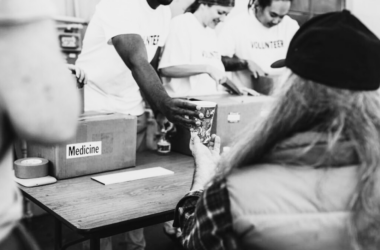
Despite the evident benefits, outreach education programs often operate on limited budgets, relying on volunteers and scarce donations. They need more support to reach more people. As the global migration crisis deepens and labour inequality grows, we must step up as compassionate citizens and take tangible action.
Imagine what one small contribution could do: buy books for a class, fund a mobile education van, or provide a scholarship for an online course. When you invest in education, you don’t just fund lessons; you plant seeds of hope.
Outreach education for undocumented workers isn’t charity, it’s justice. It’s a commitment to the belief that every human being deserves the opportunity to learn, grow, and live with dignity, regardless of paperwork status.
Conclusion
The power to change lives is in your hands. If this story has moved you, consider donating to organizations that provide outreach education for undocumented workers. Your support can help someone read their first sentence in a new language, stand up against exploitation, or find their voice in a foreign land.
Donate now and help rewrite someone’s story from a silent struggle to an empowered voice.
Let’s build a more inclusive world, one lesson at a time.