



The Power of Representation in STEM
Science, technology, engineering, and mathematics-commonly known as STEM-are the engines of modern innovation. Yet, while STEM fields drive progress, they remain largely exclusive, especially for girls of colour. When young girls don’t see people who look like them leading scientific discoveries or building breakthrough technologies, it reinforces a silent message: “You don’t belong here.”
Representation matters. Seeing women of colour in labs, at the helm of tech startups, or winning prestigious scientific awards ignites ambition and validates dreams. Inclusive STEM education for girls of colour starts with recognizing the importance of visibility and actively promoting role models who reflect the diversity of our society. These figures not only inspire but also prove that success in STEM is not determined by race or gender but by passion, curiosity, and opportunity.
Barriers to Access: The Hidden Challenges
Despite growing awareness, systemic challenges continue to undermine access to quality STEM education. Schools in underserved communities often lack the resources needed for hands-on science labs, updated technology, and highly trained STEM educators. Girls of colour are frequently overlooked for advanced math and science classes and may face bias that discourages their participation.
Cultural expectations can also play a role. In some communities, the pursuit of science and technology by girls is still viewed as unconventional. Without encouragement from teachers, mentors, or families, many potential scientists and engineers never get the chance to explore their talents.
Worse still, once girls of colour make it into STEM environments, they can be met with isolation and microaggressions. This creates a psychological toll that drives many to change paths before they reach their full potential. Addressing these challenges isn’t just about fairness-it’s about unlocking untapped talent that can transform the world.
Building Pathways: What Inclusive Education Looks Like
So, what does inclusive STEM education for girls of colour look like?
It begins with reimagining the classroom. Teachers must be equipped with cultural competency training, allowing them to nurture diverse learners effectively. Curricula should reflect the contributions of women of colour in STEM, past and present, to validate students’ identities and histories.
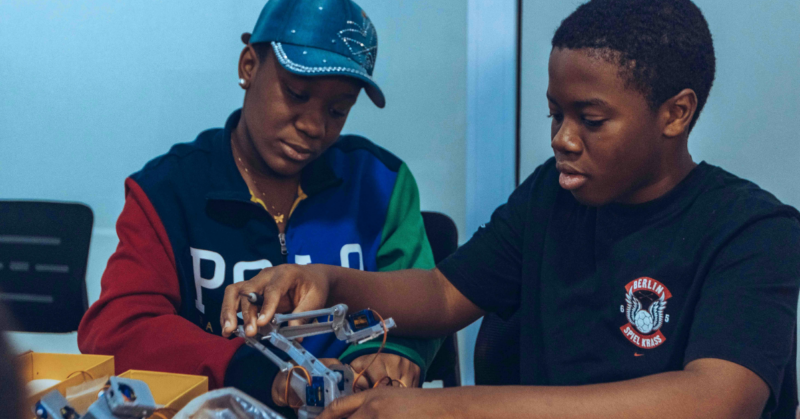
Mentorship programs can bridge gaps in access, pairing young learners with STEM professionals who offer guidance, support, and real-world insight. Community-based STEM initiatives, such as coding camps, robotics clubs, or science fairs specifically designed for girls of colour, create safe spaces where curiosity is celebrated and innovation flourishes.
Another important piece of the puzzle is early exposure. Research shows that girls begin to lose interest in STEM as early as middle school. To counter this trend, intervention must begin in elementary school, or even earlier, through play-based learning and storytelling that centers on science and tech exploration.
Partnerships between schools, nonprofits, and tech companies can also bring cutting-edge tools and knowledge to communities that would otherwise be left behind. These collaborations can foster ecosystems where inclusive education becomes the standard-not the exception.
The Ripple Effect: Why It Matters to Everyone
Investing in inclusive STEM education for girls of colour doesn’t only benefit a single demographic-it uplifts entire communities and strengthens society as a whole.
Diverse teams are proven to be more innovative. When girls of colour are empowered to become engineers, scientists, and data analysts, they bring unique perspectives that lead to better problem-solving and more inclusive technologies. They are more likely to create solutions that address the needs of marginalized populations, close health and education gaps, and develop culturally competent AI and medical tools.
Moreover, when these young women succeed, they inspire others around them-siblings, peers, and even adults-creating a ripple effect of ambition and achievement. Economically, increasing the participation of girls of colour in high-paying STEM fields can break cycles of poverty, build generational wealth, and contribute to more equitable economic development.
It’s time to recognize that the future of innovation depends on the inclusivity of its architects. Inclusive STEM education for girls of colour is not a side project-it is a national priority.
Conclusion: Be the Spark That Lights the Way
The journey toward inclusive STEM education for girls of colour is ongoing-and you can play a role in changing lives today.
Whether you’re a parent, educator, tech leader, or simply a concerned citizen, your contribution matters. You can donate to programs that provide mentorship, scholarships, STEM kits, and enrichment activities tailored for girls of colour. Your support can fund coding boot camps in underserved areas, train teachers in inclusive methods, and keep doors of opportunity open for those who need them most.
Change doesn’t happen by accident-it’s built by individuals who believe in a better, fairer world. Let’s invest in the minds that will build tomorrow’s breakthroughs.
Make a difference now. Donate to support inclusive STEM education for girls of colour and be a part of a future where every girl’s potential is realized.