


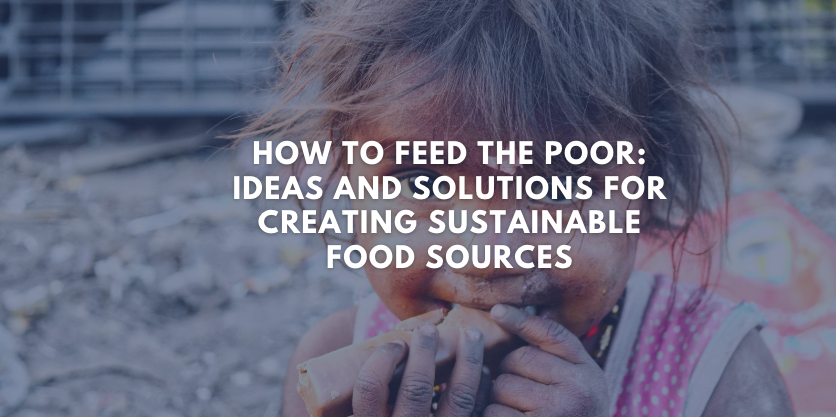
With the rising number of people living in poverty, it is more important now than ever to find sustainable solutions to provide access to food for those who cannot afford it. There are a variety of things that can be done to create sustainable food sources for the poor, from food banks and food pantries to school lunch programs and community gardens. However, it is important to consider the underlying issues that contribute to poverty and food insecurity to ensure that those solutions are effective and long-lasting. This article will explore different ideas and solutions for how to feed the poor and create sustainable food sources by examining the current state of poverty and food insecurity, as well as potential solutions. It will also discuss the importance of considering the underlying causes of poverty and food insecurity to create solutions that are not only effective but also long-lasting.
Current State of Poverty and Food Insecurity
It is estimated that nearly 1 billion people around the world suffer from chronic hunger. In addition, roughly 783 million are undernourished and another 2 billion people suffer from food insecurity. These numbers show how widespread hunger is, which makes it all the more important to find sustainable solutions for feeding the poor. Unfortunately, several issues contribute to these problems, such as social and cultural issues, economic issues, and the current state of food production and distribution. Social and Cultural Issues: Social and cultural issues are the main cause of hunger and food insecurity among the poor. Much of this can be attributed to the lack of government-wide policies and programs in addressing these issues. This leads to low social capital in poor communities, which hinders their ability to generate income and become self-reliant. Economic Issues: Economic issues are closely related to social and cultural issues. Many of the poor lack access to basic needs such as good health care, education, jobs, and property. This causes them to have low incomes and a decreased likelihood of being able to purchase basic food items. Food Production and Distribution Issues: The current state of food production and distribution has several issues that contribute to poverty and food insecurity among the poor. Some of these include food price volatility, increasing CO2 emissions, and negative social and environmental impacts on food production and distribution.
Potential Solutions for Feeding the Poor
The goal of finding sustainable solutions for how to feed the poor is not to follow a particular solution blindly, but to use the information to make an informed decision. This means that the potential solutions for feeding the poor should be carefully considered, evaluated, and used as part of a larger solution. The following are some potential solutions that can be used to create sustainable food sources for the poor: – Food banks and food pantries – Create food gardens in schools, community spaces, or at home – Food gardens can be used to provide vegetables to local food banks or food pantries to be distributed to the poor. These organizations can also be used to teach children about growing their vegetables, providing a socially engaged use of school gardens. – Create a community garden – A community garden can be used to provide a sustainable source of food for the poor by providing community members with a place to grow their vegetables and make new friends while doing so. – Provide free meals through lunch programs – A lunch program can be used to provide free, healthy meals for children in under-served schools. These programs can be implemented as part of a community garden to further provide a social and educational use of the program. – Create composting programs – Composting programs can be used to create sustainable sources of compost for gardening and farming.
Food Banks and Food Pantries
The government-run National School of Food and Wine (NSFW) has been a source of inspiration in creating sustainable food sources for the poor. The NSFW is a network of entrepreneurs providing food assistance and education to the poor. By joining the network, entrepreneurs can receive free technical assistance and training, as well as access new markets for their products. There are a variety of ways that businesses can contribute to the network and make a difference in the lives of the poor. Some of these include: – Providing nutritious meals for the poor – Food banks and pantries often feed the hungry and malnourished, leaving them far from being self-sufficient. By donating food to these organizations, entrepreneurs can help provide nutritious meals for the poor. – Providing healthy meals – By offering healthy snacks, snacks, and meals to the poor through food banks, entrepreneurs can help provide food sources that are not only nutritious but also fit within the food bank’s caloric guidelines. – Providing shelter and water – Many food banks and pantries are set up in under-served areas, such as in schools or neighborhoods with a high number of low-income families. By providing these organizations with funding or donated resources, entrepreneurs can help provide these programs with sustainable sources of funding.
School Lunch Programs
School lunch programs are a great way to create sustainable food sources for the poor and address the issue of childhood obesity. These programs provide lunches for children at no cost. The USDA’s Child and Adult Care Food Program (CACFP) provides meals for children in child care centers, after-school programs, and summer camps. By donating to these organizations, entrepreneurs can provide a nutritious, low-cost alternative to another source of food for the poor, such as a school lunch program. Some of the ways this can be done are: – Donate food – Another way to donate food is to bring it to the organization and let them know how much food you want them to distribute. – Market your products – Through partnerships with school lunch programs, entrepreneurs can market their products and make a profit from doing so. This can be done by selling products such as candy, soda, or other unhealthy items. – Provide funding – Entrepreneurs can also donate funding to school lunch programs to help offset the cost of providing meals to the poor, such as through donating money to a 501(c)(3) organization.
Community Gardens
Community gardens provide a sustainable source of food for the poor. These gardens are often run by non-profit organizations, schools, cities, or counties. They are often used to provide educational opportunities for children and to build community spirit, which can be used to make the garden more sustainable. These gardens can be used to provide a variety of crops and products that are grown to help meet the nutritional needs of the community, such as healthy produce and fruit. Some of the ways entrepreneurs can use community gardens are: – Market your products – Through partnerships with community gardens, entrepreneurs can market their products and make a profit from doing so. This can be done by selling products such as candy, soda, or other unhealthy items. – Provide funding – Community gardens can be used to provide a sustainable source of funding for non-profit organizations or governments. This can be done by selling plots of land or other resources. – Plant beneficial crops – Some community gardens are planted with crops that help protect the environment, such as sunflowers or tomatoes. These crops can be planted in a sustainable manner, such as through open-pollinated seeds.
Free Meal Programs
Free meal programs provide a healthy, low-cost source of food for the poor. These programs are often set up by non-profit organizations, churches, or cities. They provide free breakfast and lunch to those in need. These programs often run out of donated buildings, such as schools, churches, community centers, or government buildings. Entrepreneurs can help offset the cost of providing these programs with donations or volunteering. Some of the ways entrepreneurs can help are: – Donate food – Another way to donate food is to bring it to the organization and let them know how much food you want them to distribute. – Market your products – Through partnerships with free meal programs, entrepreneurs can market their products and make a profit from doing so. This can be done by selling products such as candy, soda, or other unhealthy items. – Provide funding – Entrepreneurs can provide funding to these programs by donating money to a 501(c)(3) organization. – Plant beneficial crops – Some free meal programs are planted with crops that help protect the environment, such as sunflowers or tomatoes. These crops can be planted in a sustainable manner, such as through open-pollinated seeds.
Considering the Underlying Causes of Poverty and Food Insecurity
All of the potential solutions that have been discussed in this article can be used to create sustainable food sources for the poor. However, it is important to consider the underlying causes of poverty and food insecurity to ensure that those solutions.
ALSO READ